
The Core Beliefs Behind Helpjuice’s Mission to Transform Knowledge Sharing 2026
In a world drowning in information yet starving for clarity, knowledge has become both our greatest asset and our deepest challenge. Every day, organizations across industries face the same fundamental problem: how do we capture what we know, organize it effectively, and make it accessible to those who need it most? This question has driven countless conversations in boardrooms, inspired countless software innovations, and shaped the vision of companies like Helpjuice that are committed to solving this critical problem.
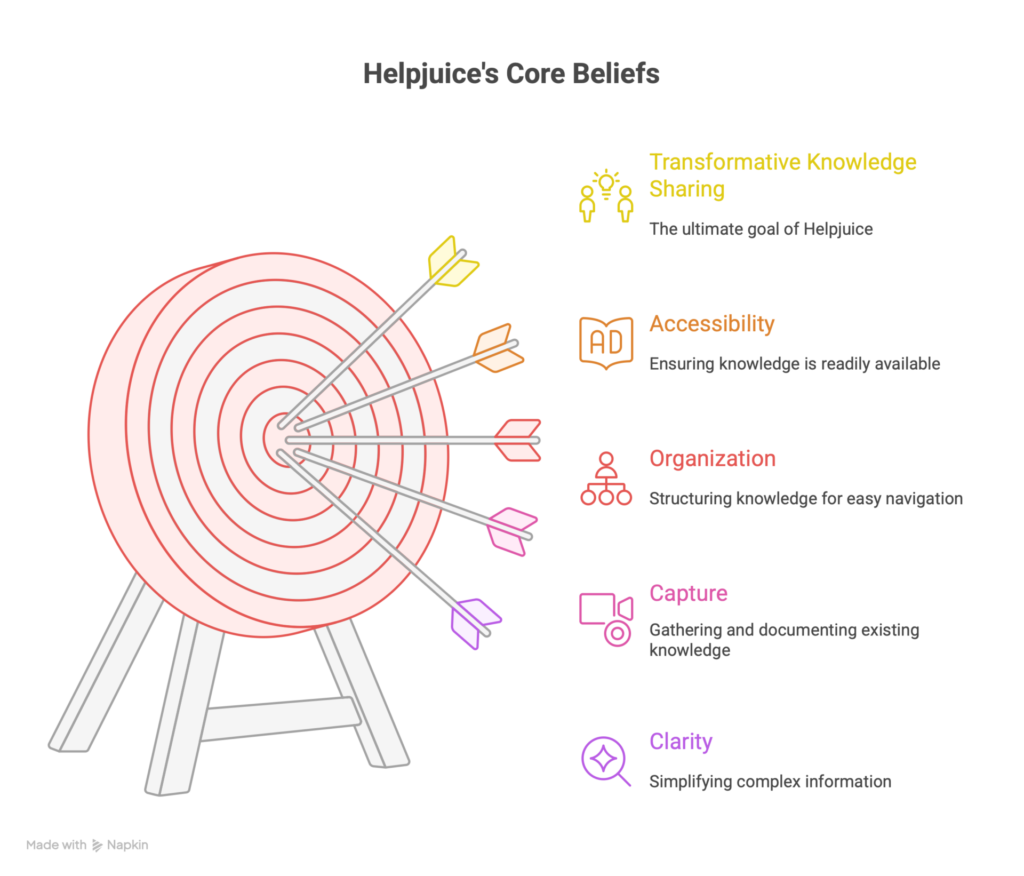
Helpjuice’s mission to become the world’s number one knowledge base software isn’t born from arrogance or market ambition alone. It emerges from a genuine belief that better knowledge sharing can fundamentally transform how people work, learn, and grow. To understand what makes Helpjuice different, we need to look beyond the feature list and dive into the core beliefs that guide every decision, every product update, and every interaction with customers.
Understanding the Knowledge Crisis of Our Time
Before we explore Helpjuice’s core beliefs, it’s worth understanding the problem they’re trying to solve. In most organizations today, knowledge exists in scattered fragments. It lives in email inboxes, gets buried in Slack conversations, sits forgotten in outdated documents, and lives only in the minds of key employees who are constantly interrupted with the same questions.
Consider a typical customer support team. A new team member joins and needs to onboard. Instead of having a clear, organized place to learn, they spend weeks piecing together information from different sources. Or think about a product team that’s building a new feature. They need to understand the current system, previous decisions, and why certain choices were made. This information should be at their fingertips, but often it’s scattered across multiple platforms and repositories.
The result is wasted time, decreased productivity, and increased frustration. Employees spend more energy searching for information than actually using it to do their jobs. Customers don’t get quick answers because support teams can’t easily access the knowledge they need. Teams operate in silos because crucial institutional knowledge isn’t shared effectively.
This isn’t a small problem. It’s a massive efficiency drain that affects every organization, regardless of size or industry. And it’s been this way for far too long.
The Foundation: Belief One – Knowledge Should Be Democratized
At the heart of Helpjuice’s mission lies a fundamental belief: knowledge should belong to everyone, not just those at the top of an organization.
Historically, information was power. Those who controlled the information controlled the organization. In many traditional companies, this remains true. Certain executives, senior employees, or specific departments hoard information, creating bottlenecks and making it impossible for others to do their best work. This artificial scarcity of knowledge hampers innovation, slows decision-making, and creates a culture of gatekeeping rather than collaboration.
Helpjuice rejects this model entirely. The company believes that when knowledge is transparent, accessible, and well-organized, everyone in an organization benefits. A customer support representative can answer complex questions without waiting for an engineer. A new hire can get up to speed faster without monopolizing experienced employees’ time. Product managers can make better decisions because they have access to the full context of previous choices.
This democratization of knowledge goes beyond internal organizations. Helpjuice believes that businesses should also empower their customers with knowledge. Instead of customers having to contact support for every small issue, they should have access to a self-service knowledge base where they can find answers independently. This shifts the dynamic from a support model based on scarcity to one based on abundance and empowerment.
When knowledge is democratized, remarkable things happen. Productivity increases. Innovation accelerates. Employees feel more empowered and engaged. Customers feel supported and valued. Teams can move faster because they’re not constantly recreating work or rediscovering information that already exists somewhere in the organization.
The Foundation: Belief Two – Knowledge Organization Is an Art and a Science
Having information available is one thing. Having it organized in a way that people can actually find and use it is something else entirely.
Helpjuice understands that knowledge organization requires both structural thinking (the science) and user empathy (the art). On the science side, this means creating systems that are logical, intuitive, and follow information architecture principles. It means thinking about how people search, what terminology they use, and what connections they’re likely to make.
But it also requires an artistic sensibility. It’s about understanding human behavior, recognizing that people learn differently, and knowing that the same information needs to be findable through multiple pathways. Some people prefer to browse categories. Others want to search with specific keywords. Still others benefit from seeing related articles. Effective knowledge organization accommodates all these approaches.
Many organizations fail at this step. They dump information into a system without thinking about structure. They create knowledge bases that require users to know exactly what they’re looking for, with no room for browsing or exploration. They organize information by internal department structure rather than by what actually makes sense to the user.
Helpjuice’s second core belief is that knowledge organization matters as much as the knowledge itself. A brilliantly organized knowledge base that users can easily navigate is worth far more than a comprehensive repository that’s impossible to use. This belief drives the platform’s emphasis on search functionality, intuitive navigation, clear categorization, and the ability to create meaningful connections between related articles.
The Foundation: Belief Three – Knowledge Sharing Should Be Effortless
Here’s where many knowledge management projects fail: they make sharing knowledge too difficult.
Companies invest in platforms, but then they make contributing to those platforms such a bureaucratic pain that employees avoid it. Articles need approval from multiple layers. The interface is confusing. The process feels like extra work rather than a natural part of someone’s job. The result? The knowledge base becomes stale, incomplete, and eventually, people stop using it.
Helpjuice’s third core belief challenges this approach. They believe that knowledge sharing should be so effortless that it feels natural. It should fit into people’s existing workflows rather than requiring them to learn new processes or add extra steps to their day.
This philosophy manifests in practical ways. The platform is designed to be intuitive enough that employees don’t need extensive training to contribute. Creating an article should be as easy as writing an email. Updating existing knowledge should require minimal friction. Organizing content should feel logical rather than like wrestling with a complex taxonomy system.
When sharing knowledge becomes effortless, something magical happens. More people contribute. Knowledge stays current because it’s easy to update. Institutional memory gets captured while people are still fresh on a topic, rather than months later when details have faded. The knowledge base grows organically and genuinely reflects what the organization actually knows and does.
This belief also extends to accessing knowledge. Finding what you need should be so quick and easy that you never consider not checking the knowledge base first. The speed and simplicity of the search experience directly impacts whether people use the platform. Helpjuice understands this and designs accordingly.
The Foundation: Belief Four – Knowledge Should Drive Better Decisions
Beyond efficiency and productivity, Helpjuice believes that better knowledge sharing leads to better decision-making.
When people have access to comprehensive, well-organized information about previous decisions, past attempts to solve similar problems, and institutional lessons learned, they make smarter choices. They avoid repeating mistakes. They build on successful approaches rather than starting from scratch. They have the context they need to understand the implications of their decisions.
Think about a product team deciding whether to change a key feature. If they have access to documented discussions from when that feature was originally designed, feedback collected over years of customer usage, and technical analysis of potential redesigns, they can make a vastly more informed decision. They understand the trade-offs. They know what has and hasn’t worked. This isn’t just about making better decisions in the moment; it’s about building a culture where decisions are grounded in knowledge rather than opinions.
This belief drives Helpjuice’s commitment to making knowledge searchable and connected. When you’re researching a decision, you need to be able to find related information, trace the history of an issue, and see how different pieces of knowledge connect to each other. A traditional document management system treats each piece of information as isolated. A knowledge base worthy of the name should illuminate connections and provide the full context around any topic.
The Foundation: Belief Five – Knowledge Changes Lives
The final core belief isn’t about business metrics or productivity improvements, though those matter. It’s more fundamental: Helpjuice believes that knowledge changes lives.
Consider what happens when a customer finds exactly the answer they need in your knowledge base at two in the morning, while you’re asleep. They solve their problem independently. They feel empowered. Their experience with your company improves. Their life is a tiny bit better because someone, somewhere, took the time to document that knowledge and make it accessible.
Or think about a junior employee who’s just starting out. They’re uncertain, they don’t want to bother their busy manager with basic questions, but they need to learn. A great knowledge base becomes their mentor. It accelerates their learning, builds their confidence, and helps them become productive faster. That employee’s career trajectory is different because they had access to good knowledge when they needed it.
On a larger scale, knowledge democratization addresses one of the great inequities in our world. Throughout history, knowledge has been gatekept—by geography, by economics, by social status. The internet has made vast amounts of information available, but organizations still tend to hoard their specific knowledge. Companies that believe in the power of knowledge sharing and make it a priority are choosing to level the playing field. They’re giving people the tools they need to succeed, regardless of their starting point.
Helpjuice’s mission to become the world’s number one knowledge base software is ultimately about this: enabling organizations to share knowledge in ways that change lives. Whether it’s employees who can do their jobs better, customers who can solve their own problems, or companies that can operate more efficiently and make better decisions, knowledge sharing creates positive ripples.
How These Beliefs Shape Product Development
Understanding Helpjuice’s core beliefs isn’t purely academic. These beliefs directly shape how the platform is built and updated.
When designing a new feature, Helpjuice asks: Does this make knowledge more accessible? Does this democratize information or reinforce gatekeeping? Does this make sharing easier or harder? Does this help people find the knowledge they need to make better decisions? The core beliefs serve as a north star for product decisions.
This is why Helpjuice emphasizes powerful search, intuitive organization, easy contribution, and comprehensive access controls that let organizations decide who should see what. These features don’t just happen; they flow from the core beliefs.
It’s also why Helpjuice invests heavily in user research and feedback. To truly understand whether knowledge is being shared effectively, you need to hear from the people actually using the platform. Are they finding what they need? Is contributing to the knowledge base easy or frustrating? What’s missing? These aren’t one-time questions; they’re ongoing conversations that keep the platform aligned with user needs and the core beliefs that drive the company.
The Competitive Landscape and Standing Out
In 2026, the knowledge management space is crowded. There are many tools competing for attention. Some are general-purpose platforms that include knowledge management as one feature among many. Others are specialized knowledge base solutions. Some focus on enterprise complexity. Others emphasize simplicity.
What makes Helpjuice different isn’t a particular feature that competitors lack. Competitors will eventually build similar features. What makes Helpjuice different is the coherent set of core beliefs that guides every decision. These beliefs create a consistent philosophy about what matters: democratization, organization, ease of sharing, better decision-making, and genuine impact on people’s lives.
Organizations that choose Helpjuice aren’t just choosing a software platform. They’re choosing an approach to knowledge management that’s built on these principles. They’re saying that they believe knowledge should be shared, that organization matters, that ease of use is non-negotiable, and that the goal is ultimately transforming how people work and grow.
Looking Forward to 2026 and Beyond
As we move into 2026, the importance of effective knowledge sharing only grows. Remote work is increasingly common, organizations are more distributed, and the pace of change accelerates. In this environment, having a single source of truth where knowledge is organized, accessible, and current becomes even more critical.
Helpjuice’s mission to become the world’s number one knowledge base software is ambitious, but it’s anchored in these core beliefs that address genuine, pressing needs. The company isn’t pursuing market leadership for its own sake. The goal is to reach organizations everywhere and help them transform how they share knowledge.
This requires ongoing commitment to the core beliefs, continuous improvement based on user feedback, and unwavering focus on solving real problems rather than chasing trends. It requires staying true to the philosophy even when shortcuts might be tempting, because the integrity of the platform depends on genuinely delivering on these beliefs.
Conclusion: Why This Matters
At their core, Helpjuice’s five beliefs aren’t novel. They’re fundamental truths that many people intuitively understand: knowledge should be shared, organization matters, ease of use is important, information should drive decisions, and these things ultimately change lives. What makes Helpjuice special is taking these beliefs seriously enough to build a platform around them consistently and completely.
In 2026 and beyond, expect to see knowledge base software becoming increasingly central to how organizations operate. Those companies that truly commit to the core principles of democratization, organization, ease of sharing, and genuine impact will be the ones that succeed. Those that treat knowledge management as an afterthought or approach it cynically will fall away.
Helpjuice’s mission isn’t just to build great software. It’s to transform knowledge sharing in a way that makes organizations more efficient, teams more empowered, customers more satisfied, and ultimately, lives better. When you have core beliefs that clear and values that strong, the path forward becomes obvious. That clarity, combined with relentless execution, is what will drive Helpjuice toward its ambitious goal of becoming the world’s number one knowledge base software.







One Comment