
The Human Workplace Revolution: How Textio’s AI-Powered Communication is Reshaping 2026
Introduction: The Imperative for Change
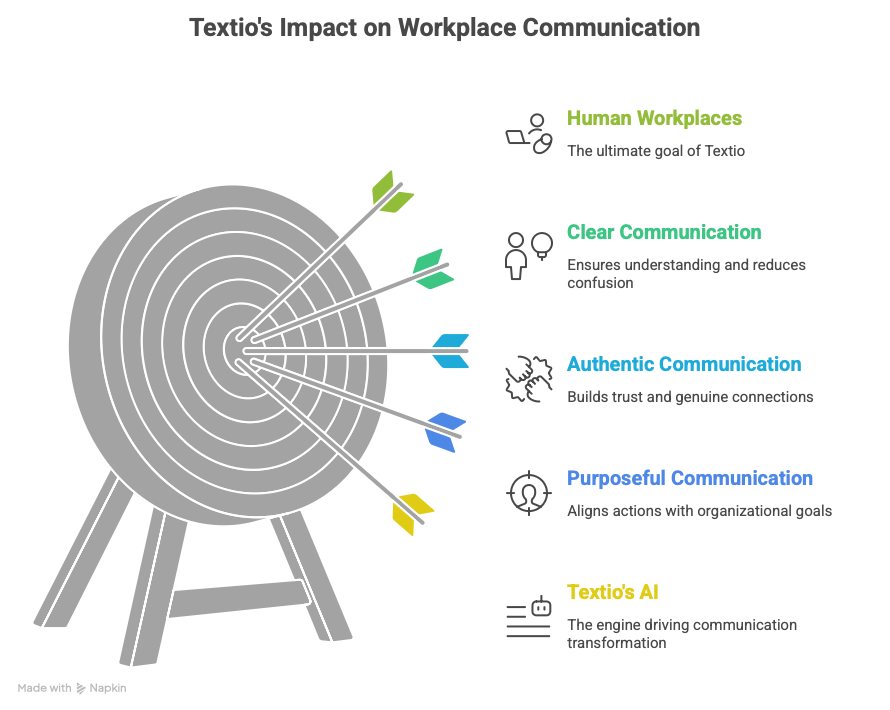
We stand at an inflection point in how organizations operate. As we progress through 2026, a fundamental truth has become undeniable: the most valuable organizations are not those with the smartest algorithms, the fastest infrastructure, or the deepest pockets—they are those that have learned to communicate with clarity, authenticity, and purpose. Yet paradoxically, this era of digital connectivity has left many workplaces more fractured than ever. Managers are stretched thin, employees are tuning out, and trust is slipping across organizations at every level. Against this backdrop, Textio has emerged not as a typical software solution, but as a catalyst for transforming how organizations speak to and about their people.
Founded in 2014 by a linguistics expert and a technologist, Textio has spent over a decade solving a problem that most organizations don’t even recognize they have: their own communication is working against them. The platform’s promise is elegantly simple yet profoundly impactful—put clear, actionable communication at the center of everything an organization does.
With artificial intelligence as its engine from day one, Textio has quietly reshaped how 25% of the Fortune 500, including giants like American Express, Bloomberg, Cisco, Johnson & Johnson, Samsung, and Spotify, attract talent and develop their people. But in 2026, as the stakes of communication competence have never been higher, Textio’s mission has taken on even greater urgency: building more human workplaces, one message at a time.
The Communication Crisis: A Problem Hiding in Plain Sight
The irony of modern work is striking. Organizations invest millions in employee engagement initiatives, wellness programs, and leadership development, yet often stumble on the most basic requirement: clear, fair, and actionable communication. The problem manifests in multiple ways, each with measurable consequences.
First, consider hiring. When job descriptions are crafted without intention or oversight, they unknowingly exclude qualified candidates through biased or opaque language. A posting that appeals to a “digital native” may deter experienced professionals who don’t self-identify with trendy terminology. Vague competency descriptions leave candidates guessing about what success truly looks like. The result? Organizations shrink their talent pools, miss diverse candidates, and end up with higher turnover because the reality of the role doesn’t match the marketing of it.
Second, examine performance feedback. Studies reveal that 91% of workers report experiencing some form of workplace discrimination, and much of it flows through the feedback process. Managers, often untrained in delivering constructive criticism, resort to vague generalizations (“You’re not a team player”), personality-based comments (“You need to be more outgoing”), or unconscious biases that inflate or deflate assessments based on factors unrelated to actual performance.
When feedback lacks clarity and actionability, employees cannot improve. When it reflects hidden bias, it becomes a mechanism of exclusion rather than development. The consequence is a workforce that feels unheard, undervalued, and ultimately leaves. The average cost of that departure: up to 33% of the employee’s annual salary.
Third, internal communications often remain stuck in command-and-control patterns. In 2026, when information moves at the speed of AI and employees expect dialogue, not monologues, many organizations still broadcast messages rather than create meaning. One research finding is particularly telling: while organizations tout cutting-edge communication platforms, 52% of employees still prefer in-person meetings for critical updates—not because the technology is inferior, but because authenticity and human connection matter more than speed. When clarity is absent, trust erodes.
These are not edge cases. They represent systemic failures in how organizations communicate, failures that compound across the hiring journey, the management relationship, and the employee experience.
How Textio Redefines Communication Through Purpose-Built AI
Unlike generic AI writing assistants, Textio was architected from the ground up to solve communication problems that matter in organizational contexts. Its approach is grounded in two critical insights: first, that human language carries invisible biases that systematically disadvantage certain groups; and second, that great communication is both clear and actionable, driven by specificity and oriented toward growth.
Textio’s platform works in two primary domains, each addressing a critical juncture in the employee lifecycle.
For Recruiting: Making Job Postings That Truly Attract
Job descriptions are the first interaction between an organization and potential talent. Yet most are written in isolation, crafted by hiring managers with little training in inclusive language or candidate psychology. Textio changes this. By analyzing millions of job postings monthly, Textio’s AI identifies language patterns associated with diverse candidate attraction and performance prediction. When a hiring manager drafts a job description in Textio, the system provides real-time feedback—highlighting phrases that may inadvertently exclude candidates, suggesting more inclusive alternatives, and even predicting how the posting will resonate with target talent pools.
The mechanism is subtle but powerful. A posting that says “aggressive go-getter” may be historically correlated with successful candidates, but language analysis reveals it systematically appeals less to women than to men—not because women cannot be assertive, but because the coded language triggers different associations. Textio doesn’t delete such phrases; it informs. It might suggest “results-driven” or “strategic thinker” instead, language that broadens appeal without diluting job expectations. The cumulative effect is job descriptions that are simultaneously more inclusive and more effective at predicting candidate success.
Integration with applicant tracking systems (ATS) like Greenhouse and Workday means that recommendations flow directly into existing workflows. Managers see suggestions in real time, making adjustments feel natural rather than intrusive. More than anything, the system is designed for speed and clarity—it generates bias-free job posts in seconds, not hours.
For Performance Management: Transforming Feedback into Growth
Textio Lift, the performance management component, extends this logic to perhaps the most consequential conversation in an employee’s tenure: the performance review. When managers write feedback, they often struggle with three competing demands: being honest about performance, being fair across their team, and being constructive in a way that drives growth. Most managers meet one or two of these criteria; Textio is engineered to help them meet all three.
The system guides managers toward clarity by flagging vague language. “Needs to be more collaborative” becomes “Consider asking for input from at least three colleagues before finalizing project proposals.” “Poor communication” transforms into “In meetings, often jumps to solutions without first understanding the problem—recommend pausing after asking questions and summarizing before proposing.” The feedback becomes specific enough that employees understand what change is expected and how to demonstrate it.
Textio simultaneously guards against bias. When a manager’s feedback disproportionately mentions personality traits for some employees but work behaviors for others—a pattern that often tracks with gender or ethnicity—the system flags it. Reports broken down by demographic group and department surface these inequities at an organizational level, allowing HR leaders to intervene before biased patterns become embedded in promotion, compensation, or attrition decisions.
What emerges from this process is profound. Employees receive feedback they can actually act on. Managers provide guidance that feels fair and focused. Organizations collect data that reveals where systemic bias exists, enabling targeted correction. In the best case, this transforms feedback from an annual compliance exercise into a genuine tool for development.
The Dual Impact: Where Hiring and Feedback Converge
The true power of Textio is not in any single feature but in the compounding effect of clear, fair communication across the employee journey. Organizations that implement Textio for both recruiting and performance management unlock a virtuous cycle.
When job descriptions are inclusive and accurate, new hires enter with realistic expectations and stronger cultural fit. When onboarding feedback is clear and growth-oriented, those hires develop faster. When managers deliver actionable feedback consistently, employees engage more deeply. When feedback is demonstrably fair across demographic groups, trust in leadership increases.
The data supports this: companies implementing AI-powered diversity hiring initiatives saw a 22% increase in diverse hires within the first year, while research from McKinsey reveals that organizations in the top quartile for diversity are 36% more likely to outperform financially. IBM’s use of AI in recruitment reduced time-to-hire by 30%, while Unilever’s AI-enhanced screening led to a 16% increase in diversity.
But the impact extends beyond diversity metrics. Clear, actionable feedback directly influences engagement and retention. Research on performance management consistently shows that employees who receive timely, specific, and growth-oriented feedback are more engaged, more productive, and less likely to leave. Inclusive teams, research suggests, are 35% more productive. The financial case is equally clear: reducing turnover alone—which averages 33% of an employee’s salary—can fund significant talent and HR technology investments.
Measuring What Matters: The Metrics of a Human Workplace
For many HR leaders, the question remains: how do we measure the ROI of communication excellence? Textio’s platform provides multiple lenses.
At the recruiting stage, the metrics are relatively straightforward. Organizations track offer acceptance rates, new hire retention at 90 days and one year, and diversity of incoming classes. When job descriptions are optimized, acceptance rates typically increase because candidates self-select for genuine fit. Retention improves because onboarded employees face fewer surprises. Diversity increases because inclusive language broadens the candidate pool.
For performance management, the measurement is more nuanced but equally important. Organizations monitor what Textio calls the “six dimensions of feedback quality”: clarity, directness, relevance, specificity, actionability, and growth orientation. By analyzing all feedback delivered through the platform, leaders can see whether managers are improving in these dimensions and whether feedback quality is consistent across demographic groups.
A manager who consistently delivers personality-based feedback to women but behavior-based feedback to men becomes visible. A team where minority employees receive less specific or actionable feedback stands out. This is measurement that enables intervention before problems compound into promotion disparities or attrition patterns.
The most important metric, however, may be one that transcends Textio itself: employee trust in leadership. When employees see that feedback is fair, that job descriptions match reality, and that advancement is based on clear, documented performance rather than hidden biases, trust increases. 3M, implementing a discussion-based approach to manager communication, saw a 10% increase in employees reporting that “My supervisor clearly communicates plans and priorities.” That improvement in perceived communication quality translates to engagement, retention, and ultimately, business performance.
Beyond Technology: Why Communication is Humanity
Here is where the deeper significance of Textio’s mission emerges. At its core, Textio is not a technology story; it is a story about restoring humanity to organizations that have become increasingly algorithmic. Paradoxically, the more sophisticated an organization’s systems, the easier it is for human communication to degrade. When hiring is purely data-driven, applicant tracking systems can optimize for pattern-matching at the cost of discovering unexpected talent. When performance management is reduced to scores and metrics, the growth conversation disappears. When internal communications are automated, meaning dissolves.
Textio occupies a rare space: it is technology in service of humanity. Its AI does not replace the manager’s judgment; it augments it, helping managers be clearer, fairer, and more intentional about what they communicate. A hiring manager still decides whether to post a job; Textio helps them post it in language that reaches the widest qualified pool. A manager still writes the performance review; Textio ensures they write it with clarity and without unconscious bias. The technology is powerful precisely because it operates in service of human values—fairness, clarity, growth—rather than at odds with them.
This distinction matters, particularly in 2026, when skepticism about AI is mounting. In many organizations, employees worry that AI will be used to monitor and control. The reframing that Textio offers is different: AI can be used to enable better human judgment and fairer outcomes. When implemented with transparency and care, it becomes a tool that employees themselves recognize as beneficial because they experience the effects: more inclusive hiring, more fair feedback, more growth-oriented management.
Reshaping Organizational Culture from Inside Out
The long-term impact of widespread communication excellence is cultural. When an organization commits to clear, actionable communication, something shifts. Managers improve because they are guided and held accountable. Employees improve because they understand what is expected. Promotions become more transparent because the performance that earns advancement is clearly documented. Diverse candidates are attracted because job descriptions genuinely reflect the role and culture.
This is how a human workplace is built: not through mission statements or values posters, but through thousands of daily interactions where communication is clear, feedback is fair, and growth is visible. For organizations undertaking this journey, Textio serves as both a tool and a catalyst. It surfaces existing biases, trains managers toward better practices, and creates institutional memory of fair and inclusive communication.
Looking forward to 2026 and beyond, organizations face a choice. The first path is incrementalism: investing in engagement surveys, conducting leadership training, and hoping that communication improves. The second path is systematic: recognizing that communication is a discipline like any other, that clarity and fairness can be measured and improved, and that technology—when designed ethically—can enable rather than undermine human values.
Conclusion: The Competitive Advantage of Clarity
The human workplace revolution that Textio is championing is not radical or disruptive in the sense of overthrowing existing structures. Rather, it is revolutionary in asking a simple question: what if organizations were as intentional about how they communicate as they are about what they communicate? What if clarity, fairness, and growth were not ideals to aspire to but standards to embed and measure?
In 2026, when artificial intelligence is reshaping every function of the organization, the most distinctly human and competitive advantages will belong to organizations that use AI to strengthen, not replace, human judgment and connection. Textio’s over-a-decade journey—from identifying bias in feedback to building comprehensive communication excellence platforms—reflects a deep conviction: that better communication creates better workplaces, and better workplaces outperform.
For organizations beginning this journey, the entry point is straightforward. Start with the most visible pain point, whether that is attracting diverse talent or improving the quality of management feedback. Implement Textio’s platform in that domain, train managers, and measure the results. What most organizations discover is that clarity compounds. Better hiring leads to better onboarding. Better feedback leads to better engagement. Better engagement leads to lower turnover. Lower turnover strengthens team dynamics. Stronger teams communicate more effectively. And clearer communication becomes the foundation for everything else the organization builds.
The human workplace revolution is not something that will happen in the future; it is happening now, in organizations that have decided that communication excellence is not optional. Textio is not the only player in this space, but its decade-long commitment to putting communication at the center, combined with its proven track record among the world’s leading organizations, makes it a compelling partner in this journey.
In the end, this is what the human workplace revolution means: employees who feel heard, understood, and valued. Managers who can lead with clarity and fairness. Organizations that attract, develop, and retain talent because they have learned to communicate with intention and humanity. That future is not theoretical. It is being built right now, one clear message, one fair review, one inclusive job posting at a time.





2 Comments