
The Real Magic of Supervised Learning: How Machines Actually Learn
You know that moment when your phone completes your text before you finish typing? Or when Netflix somehow knows exactly what show you want to watch next? That’s not luck, and it’s definitely not mind-reading. It’s supervised learning in action, and honestly, once you understand how it works, you’ll start seeing it everywhere in your daily life.
I remember the first time someone tried to explain machine learning to me. They threw around terms like “neural networks” and “algorithmic optimization,” and I nodded along while understanding absolutely nothing. But then someone explained it differently—they said it was like teaching a child to recognize animals. You show the child a picture of a dog and say “dog,” then a cat and say “cat,” over and over until the child learns to distinguish between them on their own. That clicked for me. And that’s essentially what supervised learning is.
Let me break this down for you in a way that actually makes sense, without all the jargon that makes your eyes glaze over.

So What Exactly Is Supervised Learning?
Here’s the simplest way I can put it: Supervised learning is when you teach a computer by showing it examples with the correct answers already attached.
Think about it like this. Imagine you’re teaching someone to identify rotten fruits at a market. You’d pick up an apple and say, “See this brown spot here? This apple is rotten.” Then you’d pick up another apple and say, “This one is fresh.” You’d do this dozens of times until the person gets it. They’ve learned from your labeled examples, and now they can look at a fruit and make a judgment on their own.
That’s exactly how machines learn in supervised learning. The key difference? We’re not teaching the machine to identify fruit—we’re teaching it to recognize patterns in data. And instead of showing it dozens of examples, we often show it thousands or even millions.
The word “supervised” here is pretty literal. It means someone (a human) is supervising the learning process by providing the correct answers upfront. The algorithm learns from these labeled examples and gradually gets better at making predictions on new, unseen data.
The Heart of It All: Labeled Data
If supervised learning has a heart, it’s labeled data. This is where everything begins, and honestly, it’s where a lot of the hard work happens.
Let me give you a practical example that might hit closer to home if you’ve ever dealt with email spam. Every time you mark an email as spam in Gmail or Outlook, you’re actually helping train a supervised learning model. Your email is labeled as either “spam” or “not spam.” The algorithm sees millions of these labeled emails from millions of users and learns: “Hey, when I see these specific patterns of words, unusual sender addresses, or suspicious links, it’s probably spam.”
The quality of labeled data determines everything. If you label your training data incorrectly—if you mark legitimate emails as spam and spam as legitimate—the model will learn the wrong patterns. It’s garbage in, garbage out, as they say in the data world.
Here’s something interesting that most people don’t realize: creating labeled data is one of the most expensive and time-consuming parts of machine learning projects. You need humans to go through data and label it correctly. For something like medical imaging, you need actual radiologists to label thousands of X-rays and MRI scans. That’s not cheap, and that’s not quick.
How Does the Learning Actually Happen?
The learning process happens in two main phases: training and testing. Let me walk you through what’s actually happening behind the scenes.
Training Phase: This is where the machine learning model gets its education. You feed it thousands of labeled examples. The model looks at the input (like an email or an image) and compares what it predicts with what the correct answer actually is. When it gets it wrong, it adjusts itself slightly. It’s like a student taking practice tests, getting feedback, and then adjusting their study strategy.
This process repeats hundreds or thousands of times. Each time, the model gets a little bit better. This is called iterating, and it’s crucial to the whole process. The model isn’t trying to memorize the answers; it’s trying to learn the underlying patterns that distinguish one category from another.
Testing Phase: Once the training is done, you can’t just assume the model is perfect. You need to test it on data it has never seen before. This is critical. Why? Because a model can develop a problem called overfitting. Overfitting is like a student who memorized all the practice questions but doesn’t actually understand the concepts. They’ll fail on the actual exam with new questions they haven’t seen.
So you set aside some of your labeled data that the model never saw during training. You test the model on this new data and see how accurately it performs. This tells you how well the model will actually work in the real world.
Where Does Supervised Learning Actually Show Up?
Let’s get concrete here. Where are you actually encountering supervised learning in your everyday life?
Voice Assistants That Actually Listen
Siri, Alexa, Google Assistant—all of these are trained using supervised learning, at least in part. Someone recorded thousands of audio clips and labeled them with the exact words being spoken. The model learned to map sound patterns to words. Now when you say “Hey Siri, what’s the weather,” the system recognizes what you said and responds accordingly.
The reason these systems have gotten so much better in the last few years isn’t magic—it’s because companies have collected more labeled audio data, and they’ve gotten better at training models on that data.
Photo Tagging That’s Actually Creepy in How Good It Is
You know that feature on Facebook where it automatically suggests tagging your friend when you upload a photo? That’s image classification, a form of supervised learning. Someone trained a model on millions of labeled photos where the faces of different people were identified and tagged.
The model learned what combination of pixels represents your friend’s face—the distance between their eyes, the shape of their nose, the color of their skin. Now when you upload a new photo, the system can recognize your friend and suggest tagging them.
This technology is so effective now that it’s kind of unsettling to some people. But that’s the power of supervised learning combined with massive amounts of labeled data.
Doctors Getting a Second Opinion
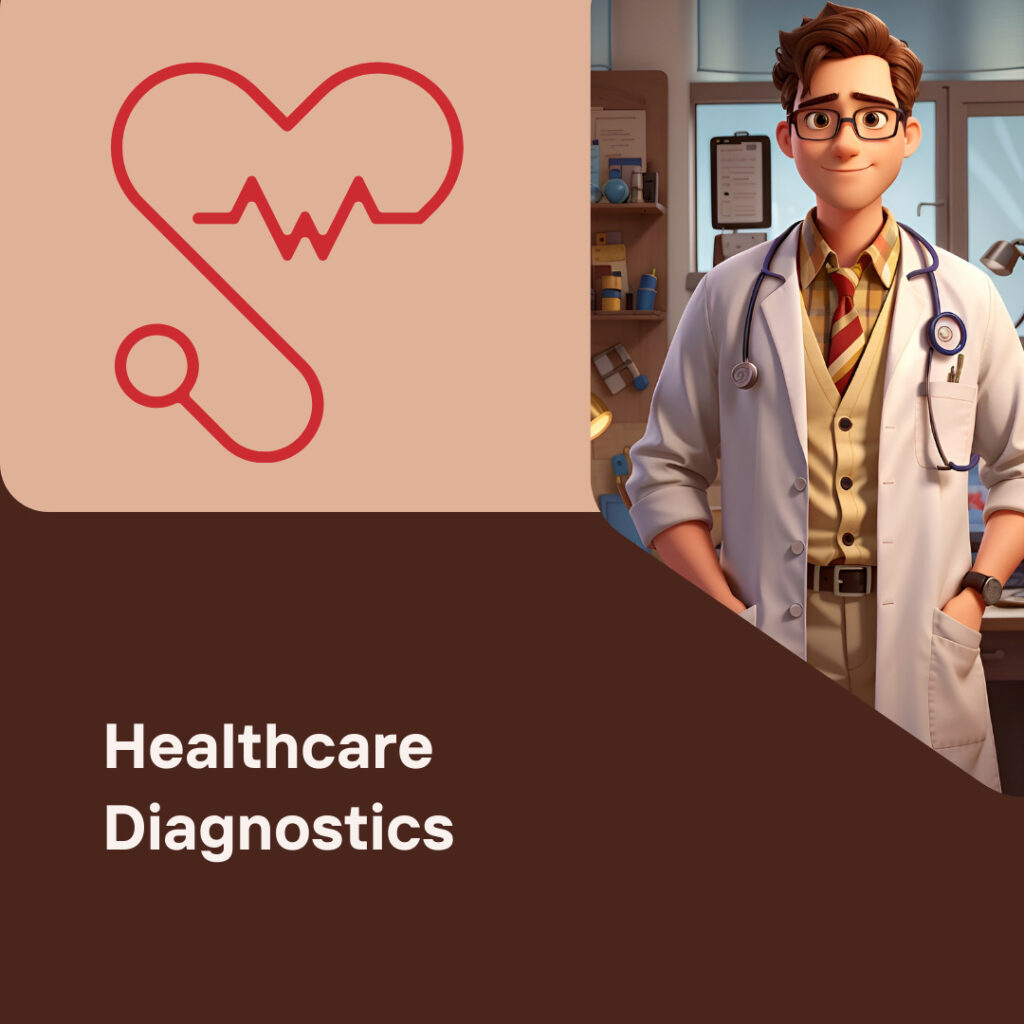
Healthcare diagnostics are one of the places where supervised learning is actually saving lives. A radiologist might look at hundreds of X-rays a day, and despite their expertise, they can miss things. A model trained on thousands of labeled X-rays—where doctors have marked tumors, fractures, or abnormalities—can help catch things the human eye might miss.
This isn’t about replacing doctors. It’s about giving them a tool. The model can flag suspicious areas for the doctor to double-check. It’s like having a second pair of very careful eyes reviewing every scan.
Netflix Knowing What You Want to Watch
Here’s something that probably happens to you all the time: You open Netflix, and there’s a show in your recommendations that you genuinely want to watch. How does Netflix know?
They have years of data about what you’ve watched, what you’ve rated highly, what shows you’ve started and finished versus abandoned halfway through. Netflix also has the same data from millions of other users. A supervised learning model has learned the patterns: “Users who watched and liked these shows tend to also like those shows.” It’s trained on millions of labeled examples of “user watched show X and gave it a rating of 5 stars.”
Now Netflix can predict with surprising accuracy what you’ll enjoy. And they’re constantly retraining these models as you watch more shows and provide more data.
Fraud Detection in Your Bank Account
Ever had your credit card declined because the bank suspected fraud? A supervised learning model was probably involved in that decision. Banks train models on millions of transactions labeled as either “legitimate” or “fraudulent.”
The model learns patterns: “Transactions from a different country within an hour, larger than usual, at unusual times of day tend to be fraudulent.” When your transaction matches a suspicious pattern, the system flags it. It’s not perfect, and sometimes legitimate transactions get blocked, but overall it’s saved consumers millions of dollars from actual fraud.
The Intelligence Behind the Process
Different Tools for Different Jobs
Supervised learning isn’t just one technique. There are different algorithms, each with different strengths.
Decision trees are like a flowchart. They make decisions based on asking yes/no questions about the data. “Is this email from a known contact? Yes. Does it contain any suspicious links? No. Okay, it’s probably legitimate.” They’re intuitive and easy to understand, but they can be overly simple for complex problems.
Support vector machines are more mathematically sophisticated. They find the best way to separate data points into different categories. Imagine you have a scatter plot with red dots and blue dots. A support vector machine finds the line (or curve) that best separates the reds from the blues.
Neural networks are inspired by how brains work. They have layers of interconnected nodes that process information. They’re particularly good at handling complex patterns, which is why they’re behind a lot of modern AI applications. The downside? They’re more like a black box—it’s harder to understand exactly why they made a particular decision.
The choice of algorithm depends on your problem, your data, and what you’re trying to accomplish.
Feature Engineering: The Often-Ignored Superpower
Here’s something interesting that doesn’t get talked about enough: the features you feed into your model matter enormously.
Let’s say you’re building a model to predict house prices. You could feed it every single piece of data: the number of bedrooms, bathrooms, square footage, age of the house, distance from the city center, average rainfall in the area, number of nearby restaurants—everything.
But not all of this data is equally useful. Some features are highly predictive; others are noise. And sometimes, features need to be transformed. Maybe instead of just using “age of the house,” you use “age of the house squared” because the relationship between age and price isn’t linear—very old houses might be more valuable for their historical significance, or less valuable because they need more maintenance.
This process of selecting, creating, and transforming features is called feature engineering, and it’s often where the real expertise comes in. It’s not as flashy as building a neural network, but good feature engineering can make a massive difference in model performance.
The Challenges Nobody Talks About
Supervised learning sounds great in theory, but in practice, there are real obstacles.
Getting Enough Quality Labeled Data
This is the big one. Building a good supervised learning model requires lots of labeled data, and getting it is expensive and slow.
Think about autonomous vehicles. To train a model to recognize pedestrians, you need thousands of labeled images of pedestrians in different lighting conditions, different weather, different angles, different clothing. You need to manually label every one of these images.
For some domains, like medical imaging, you need experts to do the labeling. You can’t just hire anyone—you need radiologists to label X-rays or pathologists to label tissue samples. That gets expensive fast.
The Overfitting Problem
I mentioned this earlier, but it deserves more attention because it trips up a lot of people building their first models.
Your model can get too good at fitting the training data. It learns not just the underlying patterns but also the noise and quirks specific to your training set. It’s like a student who memorized every past exam question but doesn’t understand the underlying principles.
The solution is testing on data the model has never seen, but even that isn’t foolproof. You might have bad luck and your test set might happen to be similar to your training set.
Class Imbalance
What if your data is heavily skewed? Let’s say you’re training a model to detect credit card fraud. Maybe 99.9% of transactions are legitimate and 0.1% are fraudulent. Your model could achieve 99.9% accuracy just by always predicting “legitimate.” That sounds great until you realize it never catches any actual fraud.
Handling this imbalance requires special techniques and careful evaluation metrics. You can’t just look at overall accuracy; you need to look at metrics like precision and recall.
The Real Skills You Need
If you’re thinking about getting into supervised learning or using it in your work, here’s what actually matters:
First, understand your problem deeply. What exactly are you trying to predict? What decisions will you make based on these predictions? Bad problem framing will doom you faster than bad algorithms.
Second, get good at data. Learn how to explore data, visualize it, understand what it’s telling you. Most of the work in machine learning is actually data preparation and exploration, not model building.
Third, understand the limitations. No model is perfect. Every model makes mistakes, and understanding when and why it makes mistakes is crucial.
Fourth, stay curious and keep learning. The field moves fast. New techniques, new frameworks, new approaches come out regularly.
Looking Forward
Supervised learning isn’t the only game in town anymore. Unsupervised learning (finding patterns in unlabeled data) and reinforcement learning (learning through trial and error) are becoming increasingly important. But supervised learning remains foundational.
The future isn’t about choosing between these approaches—it’s about combining them intelligently. Maybe you use unsupervised learning to automatically discover which features matter most, then supervised learning to make predictions, then reinforcement learning to optimize decisions over time.
What’s exciting is that these technologies are becoming more accessible. Tools and frameworks that used to require a PhD in mathematics are now available to anyone willing to put in the effort to learn. The barriers to entry are lower than ever.
Final Thoughts
Supervised learning might sound like some futuristic concept, but it’s not. It’s happening right now, powering systems that affect your life daily. Understanding how it works gives you insight into the world around you. It helps you appreciate what’s possible and also understand the limitations and potential pitfalls.
The “magic” of supervised learning isn’t actually magic—it’s a combination of good data, smart algorithms, and careful engineering. And now that you understand how it works, you’ll start noticing it everywhere. Every time your phone autocorrects your text, every time you get a relevant product recommendation, every time a system seems to know what you want—that’s likely supervised learning doing its thing.
The next time someone mentions machine learning or artificial intelligence, you won’t have to nod along confused. You’ll know that at its heart, if it’s supervised learning, someone taught that system by showing it thousands of labeled examples until it learned to recognize patterns on its own.
And that’s pretty neat when you think about it.
Quick Q&A: Your Burning Questions Answered
What’s the actual difference between supervised and unsupervised learning?
Supervised learning needs labeled data—someone provides the right answers. You’re teaching with answer keys. Unsupervised learning works with unlabeled data and tries to find hidden patterns without being told what to look for. It’s like exploring a new city without a guide versus following a guided tour.
Do I really need to be a data scientist to build a supervised learning model?
Not anymore. There are tools and platforms that make it accessible to anyone. But building something that actually works well in the real world? That requires understanding the underlying concepts. You don’t need a PhD, but you do need to actually learn the material.
How is supervised learning helping self-driving cars?
Cars need to recognize pedestrians, read traffic signs, identify lane markings, and predict what other vehicles will do. All of this uses supervised learning trained on thousands of labeled images and scenarios. The car learns “when I see this pattern of pixels, it’s a stop sign” or “when I see this, it’s a pedestrian.”
Why is labeled data so hard to get?
Because someone has to create it manually. For images, someone looks at each image and labels what’s in it. For text, someone reads each piece of text and labels it. For medical data, a doctor has to review each scan. It’s labor-intensive, and you need a lot of it.
Where should I go if I want to actually learn this stuff?
Start with free online courses on Coursera or Kaggle. Read books. Work with real datasets. Join communities of people learning together. The combination of theoretical learning and hands-on practice is what actually sticks.
Ready to explore more about how AI and technology are shaping our world? Stick around and check out my other articles on the blog. I dive deep into topics that matter in the AI and business world, and I explain them in the same straightforward way I’ve tried to do here. No unnecessary jargon, just clear thinking about complex topics.
Because here’s the thing—technology is too important to be left to people who use 50-word sentences and expect everyone to understand. Let’s make this stuff accessible together.





2 Comments