
From Import to Empire: Building Your Computer Hardware Business in 2026
When I first started thinking about starting a computer hardware business, I wasn’t looking for a get-rich-quick scheme. What attracted me to this space was simple: the Indian IT and electronics industry is booming right now, and there’s genuine opportunity for smart entrepreneurs who understand the game.
Let me be honest with you from the start. This isn’t a business where you’ll wake up wealthy next month. But if you’re willing to learn the industry, understand the margins, navigate the regulations, and actually serve your customers well, there’s real money to be made. By 2026, the landscape is shifting—and it’s creating opportunities for people like you.
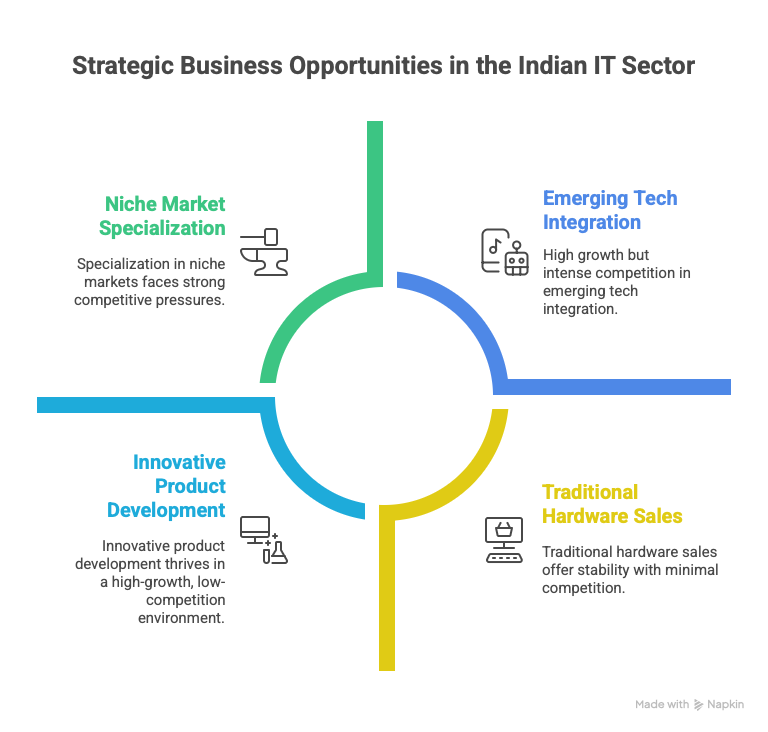
Why Computer Hardware? Understanding the Golden Goose
First, let’s talk about why you should even care about computer hardware when everyone’s obsessed with software and apps.
Here’s the thing: India’s IT and electronics industry is one of the fastest-growing sectors in the country, expanding both in terms of production and exports. It’s a $155 billion industry right now, and it’s growing faster than most people realize. The government is pushing hard for “Make in India” initiatives, which means there’s genuine support and momentum behind this space.
Now, when we talk about computers, there are two main areas: software and hardware. Software is service-oriented, mostly targeting exports. It’s competitive, everyone wants in, and it requires serious technical expertise. Hardware, on the other hand, is different. It’s goods-oriented, targeting the domestic home market where there’s constant demand.
Think about it. Every day, thousands of Indian families, small businesses, and corporate offices need computers. Schools need computer labs. Gaming cafes need systems. Office workers need upgrades. The demand never stops. And here’s the beautiful part—hardware has a completely different economics model than software.
The Hardware Market Reality: What You Need to Know
Let me paint the picture of how the hardware market actually works in India. Most computer hardware firms—and this is important—they don’t manufacture from scratch. Instead, they import machine parts and intermediate goods like motherboards, processors, memory, hard disks, and other components. Then they assemble these parts and sell them under their own brand name in the local market.
This is actually brilliant for a beginner like you. You don’t need to set up a massive manufacturing facility. You don’t need to compete with electronics giants. You’re playing a different game. You’re importing components, assembling them intelligently, and selling them to customers who have real needs.
The demand is constant. Educational institutions need computers for labs. Corporate offices need workstations. Gaming enthusiasts want custom-built machines. Small businesses need reliable computing solutions. These aren’t fancy markets—they’re bread-and-butter markets with consistent, predictable demand.
Understanding the Market Opportunity in 2026
Let me give you some real context about what’s happening right now and what’s coming in 2026.
India’s electronics manufacturing sector is expected to double within the next five years, reaching approximately $250 billion. That’s not a small number. The domestic production has nearly doubled from $48 billion in FY17 to $101 billion in FY23. This growth is accelerating, not slowing down.
Mobile phones have driven much of this growth (43% of electronics manufacturing), but there’s a significant secondary opportunity in computers and IT hardware. The PC market, in particular, has massive potential because Indians are investing more in education, remote work is normalized, and businesses are modernizing.
What excites me about the 2026 timeline is that you’re entering at a moment when government support is genuine. The government is pushing companies to make products in India, not just import them. For someone assembling and selling computers, this creates a favorable environment. Import regulations are being used to encourage local assembly, not discourage it.
The Reality Check: Challenges You’ll Face
Now, let me be absolutely honest. This business has real challenges, and I need to tell you about them before you get too excited.
Capital Intensity: This is a capital-intensive business. You need money to buy inventory—motherboards, processors, RAM, hard drives, power supplies, cabinets, and peripherals. You can’t start this business with ₹50,000. You probably need at least a few lakhs to build any meaningful inventory.
Thin Margins: The profit margins are thin. Really thin. Industry research shows that hardware assembly margins are typically 5-15% in the competitive segments. This isn’t a business where you’ll mark up products 300%. You’re working with 10-20% gross margins in most cases, sometimes less. The real margin comes from selling the components themselves, and if you’re selling to price-conscious Indian consumers, competition will keep you honest.
Competition Offers Free Assembly: Here’s something specific to the Indian market that frustrated me when I first learned about it. Most established computer retailers offer free assembly or build services if you buy the components from them. This means customers expect free assembly as a baseline. They won’t pay extra for it. So your model needs to account for this.
Import Regulations Are Complex: As of 2024-2025, India has introduced an Import Management System (IMS) for IT hardware. If you’re importing laptops, tablets, PCs, or servers, you need fresh import authorization. The application window opened in December 2024 and closes December 15, 2025. You need to understand these regulations, follow them precisely, and renew your authorizations regularly.
However—and this is important—there are no import restrictions on spare parts, components, assemblies, and subassemblies. This actually works in your favor. You can import individual components freely and assemble them locally.
Supply Chain Vulnerabilities: The Indian electronics industry is heavily dependent on imported critical components—semiconductors, PCBs, sensors, advanced displays. The global semiconductor shortage created real issues for manufacturers. Component costs fluctuate based on global factors you can’t control.
Higher Manufacturing Costs: Indian manufacturers face production costs that are 10-20 percent higher than countries like China or Vietnam. This makes competing on price very challenging. You need a smart strategy to overcome this cost disadvantage.
But Here’s Why You Still Succeed (And How)
Despite these challenges, real businesses are making money in this space right now. They’re succeeding because they’re strategic.
First, they’re not trying to compete on price with massive retailers. They’re targeting specific niches—educational institutions that need bulk orders, gaming enthusiasts who want custom builds, small businesses that need professional support, offices that value warranty and after-sales service.
Second, they’re building relationships. A retailer who treats customers well, provides technical support, does custom builds, and stands behind their products creates loyalty. People will pay a bit more for that reliability and service.
Third, they’re smart about inventory. They understand which components sell well in their region, what configurations their customers want, and they don’t overbuy inventory that’ll sit gathering dust.
Fourth, they’re using technology to their advantage. Online presence, social media marketing, content about computer builds and specifications—this costs very little but can drive significant business.
Your Step-by-Step Entry Strategy
Let me give you a practical roadmap for getting started in 2026.
Step 1: Deep Market Research (Month 1-2)
Before you spend a single rupee, understand your local market. Visit computer retailers. Talk to shopkeepers about what sells. Call schools and educational institutions to understand their procurement processes. Talk to gaming cafes about their needs. Understand who buys computers, when they buy, and what configurations they need.
This research is invaluable. It costs almost nothing but saves you from making expensive mistakes.
Step 2: Understand Regulations and Compliance (Month 2-3)
Know the import regulations inside out. If you’re importing components, you need to understand customs procedures, GST implications, and documentation requirements. If you’re importing finished assembled PCs, you need import authorization (remember the IMS system).
Connect with a customs consultant or an import-export professional. ₹5,000-10,000 spent on consulting here can save you from costly compliance mistakes.
Step 3: Find Reliable Suppliers
This is crucial. You need suppliers of components who offer:
- Competitive pricing
- Consistent quality
- Reasonable credit terms (so you don’t have to pay upfront for everything)
- Good support and handling of returns
Start with established component distributors. They already have relationships with component manufacturers and can offer you reasonable volumes and pricing.
Step 4: Start Small and Test
Don’t invest ₹10 lakhs on the first inventory. Start with ₹1-2 lakhs. Build 50-100 computers of 2-3 popular configurations. Sell them. Learn what works. Refine your approach.
This testing phase is invaluable. You’ll discover whether your pricing works, whether your configurations sell, whether your service model is sustainable.
Step 5: Develop Multiple Revenue Streams
Don’t rely on assembly alone:
- Sell assembled systems (your core business)
- Sell components at retail (margins are better)
- Offer custom builds and consulting services (premium pricing)
- Provide warranty and after-sales support (recurring revenue)
- Sell peripherals and accessories (better margins than components)
This diversification protects you when any one channel weakens.
Market Segments Worth Targeting
Let me highlight some specific segments where you can really gain traction without direct competition from massive retailers.
Educational Institutions: Schools, colleges, and coaching centers regularly upgrade their computer labs. They need bulk orders, want budget-friendly options, and value local service and maintenance. These deals might be lower margin individually but higher volume.
Gaming and Content Creation: Gamers and content creators want custom-built machines optimized for their specific needs. They’re willing to pay more for specialized builds, better components, and expert advice. This segment has better margins.
Small Business and Corporate: SMEs often need workstations or office computers. They value relationship building, warranty support, and someone who understands their business. This is a great repeat business segment.
Gaming Cafes and Internet Cafes: These businesses need multiple systems for their operations. They often buy several machines at once and look for reliable suppliers for repairs and upgrades.
Individual Gamers and Enthusiasts: People who want to build their own computers but need expert guidance. You can charge for consulting, assembly, and quality assurance.
Pricing and Margin Strategy
Let’s talk actual numbers because this is where the rubber meets the road.
In the Indian market, typical gross margins on computer assembly are 10-20%. Out of this, you have operating costs: rent for workspace, utilities, tools, packaging, transportation, marketing, and your own salary.
So if you’re selling computers with a ₹40,000 wholesale cost for ₹44,000-48,000 retail, you’re making ₹4,000-8,000 per unit. Subtract your operational costs, and you’re looking at ₹1,500-4,000 net profit per unit depending on efficiency.
This means volume matters. You need to sell 100 computers per month to have a sustainable business, not 10.
But here’s where diversification helps. If you’re also selling components at 15-20% margins, offering consultation at ₹2,000-5,000 per build, and providing warranty services at 30-40% margins, your average profit per customer interaction climbs significantly.
Building Your Brand in the Digital Age
Here’s something that separates successful hardware businesses from failures: they have visibility.
In 2026, you can’t just set up shop and hope people find you. You need:
- A basic website showing your products, configurations, pricing, and contact information. This doesn’t have to be fancy. WordPress is sufficient.
- Social media presence on Instagram and Facebook showing computer builds, specs, customer testimonials, and tech tips.
- Google Business Profile so people can find you when searching for “computer assembly near me” or “custom PC builds in [your city].”
- YouTube channel (even simple ones) showing builds, reviews, and technology content. This builds authority.
- Affiliate partnerships with component retailers where you can recommend products and earn commissions.
This digital presence costs almost nothing but drives consistent business inquiries.
Financial Projections (Realistic Numbers)
Let me give you realistic financial expectations for starting a computer hardware business in 2026.
Initial Investment: ₹3-5 lakhs (inventory of components and 50-100 pre-assembled units)
Monthly Operating Costs: ₹15,000-30,000 (workspace rent, utilities, packaging, marketing)
Conservative Sales Projection:
- Month 1-3: 10-15 units per month (you’re still getting known)
- Month 4-6: 20-30 units per month (word of mouth kicks in)
- Month 7-12: 40-50 units per month (established presence)
Revenue Scenario at Month 12:
- 45 units at ₹45,000 average = ₹20.25 lakhs per month
- Component sales and services: ₹3 lakhs per month
- Total monthly revenue: ₹23.25 lakhs
Profit Projection at Month 12:
- Gross margin (15%): ₹3.5 lakhs
- Operating costs: ₹25,000
- Net profit per month: ₹3.25 lakhs
This is achievable, but not guaranteed. Much depends on your execution, local market dynamics, and competitive landscape.
Common Mistakes to Avoid
Before I wrap up, let me tell you the mistakes I see people make in this business.
1. Insufficient Capital: Starting with too little money means you can’t build inventory, and you’ll constantly chase cash flow instead of building the business.
2. Ignoring Relationships: Treating customers as transactions instead of relationships. The businesses winning are those building trust and long-term relationships.
3. Poor Component Selection: Choosing the cheapest components doesn’t mean the best profits. Cheap components lead to returns, reputation damage, and eventually lost business.
4. No Specialization: Trying to be everything to everyone. Focus on a segment, become expert in that segment, then expand.
5. Underestimating Operational Costs: Hidden costs like tools, packaging, vehicle maintenance, and time investment add up. Budget generously.
6. Ignoring Regulations: Not understanding import regulations, GST compliance, or local business registration can get you in serious trouble.
7. Neglecting Customer Service: One bad customer experience kills multiple potential sales (people talk). Excellent service is your competitive advantage.
The Bottom Line
Building a computer hardware business from import to empire isn’t a quick path to wealth. It’s a real business that requires capital, work, customer focus, and strategic thinking.
But here’s what excites me about it: the fundamentals are strong. The market is growing. Government support is real. Demand is consistent and diversified across many segments.
If you understand the margins are thin, embrace the need for volume, build genuine customer relationships, and stay focused on service quality, you can absolutely build a profitable business. By 2026, the timing is actually quite favorable.
The computer hardware business rewards people who are serious, strategic, and customer-focused. If that’s you, the opportunity is real.
Start small. Learn the market. Refine your approach. Scale gradually. That’s how you get from import to empire.






One Comment