
15 Profitable Home-Based Business Ideas for Beginners (Low Cost & Easy Start)
If you are reading this, chances are you’re tired of depending on just one salary and dreaming of building something of your own—without taking a huge financial risk or renting an office.
The good news is that in India, home-based businesses are no longer side “timepass” projects; they are serious income sources for students, working professionals, homemakers, and even retirees. With cheap internet, UPI payments, and online platforms, you can start many businesses from a single room, a smartphone, and a few hours a day.
Over the years, I’ve seen people around me—colleagues, neighbours, and online friends—slowly turn small home experiments into stable, full-time income. Some started with just weekend orders, some with late-night freelancing after office, and some with simple WhatsApp-based businesses. The common factor? They all started small and learned as they went.
In this blog, I’ll walk you through 15 practical, profitable home-based business ideas for beginners in India that need low investment and are easy to start, even if you’re working a full-time job.
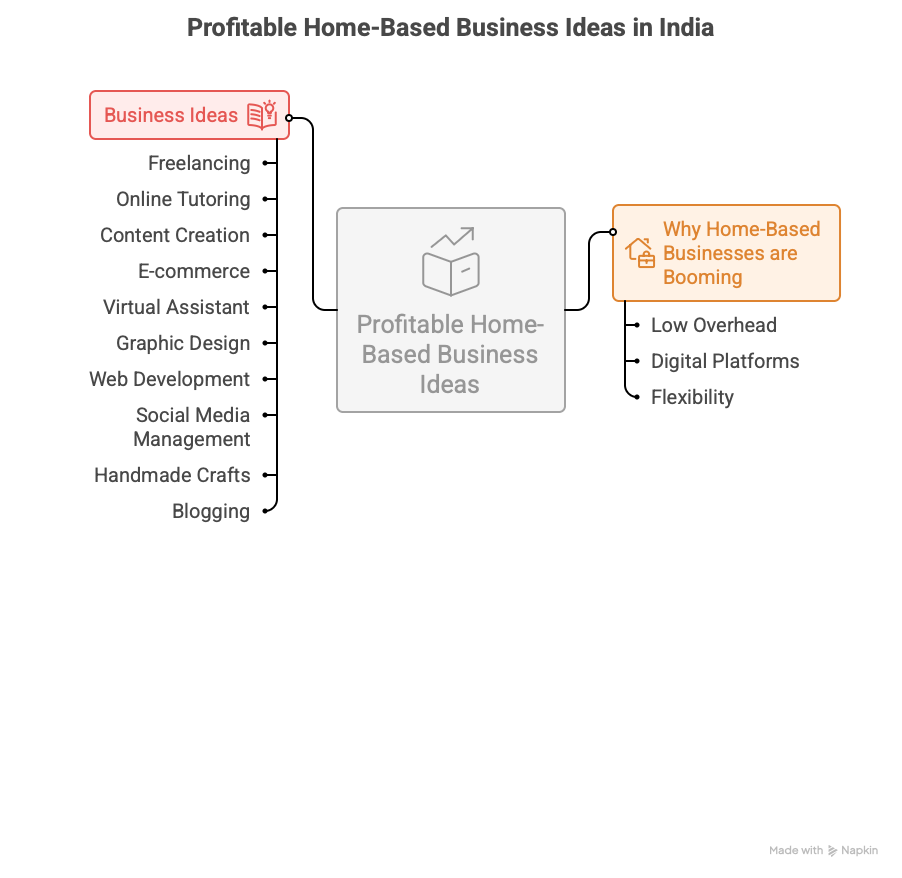
Why home-based businesses are booming in India
Before we jump into ideas, it’s important to understand why this model works so well in today’s India.
- Renting a commercial shop or office has become expensive; home-based setups remove rent, long leases, and big security deposits.
- Digital platforms—social media, marketplaces, freelancing sites—give you access to customers across India without stepping out of your house.
- Many small businesses are shifting online and actively prefer remote freelancers, tutors, and service providers instead of full-time staff.
In short, low overhead, flexible timing, and digital reach make home-based businesses a smart starting point for first-time entrepreneurs in India.
1. Freelance writing and content services
If you enjoy writing and can explain ideas clearly, freelance writing is one of the simplest home-based businesses to start.
Indian and global companies, startups, and even individual creators need blogs, website content, product descriptions, email newsletters, and social media posts. You don’t need a formal degree; what matters is clear writing and reliability.
You can start by:
- Creating 3–5 sample articles in your niche (business, AI tools, jobs, finance, fashion, etc.).
- Building a basic portfolio on a free blog or LinkedIn.
- Reaching out to small businesses, agencies, or using platforms like Upwork and Fiverr.
Initial investment is minimal—mainly your laptop, internet, and maybe a grammar tool subscription. Once you gain 2–3 regular clients, it becomes a predictable monthly income that you can scale at your own pace.
2. Online tutoring and coaching
Tutoring has always been a strong, stable income source in India, and now it has moved online in a big way. You can teach from your living room using Zoom, Google Meet, or apps like Teachmint and still reach students across cities.
You can offer:
- Academic subjects (Maths, Science, English, Accounts).
- Competitive exam prep (bank, SSC, CA foundation, etc.).
- Spoken English or soft skills.
- Niche skills like SAP, Excel, Python basics, or finance tools based on your experience.
The investment is close to zero if you already have a smartphone or laptop and a stable internet connection. Start with 3–5 students from your network or housing society, provide genuine value, and ask for referrals. Over time, you can increase batch size, fees, or even launch recorded courses.
3. Blogging and affiliate marketing
If you already run or plan to start a blog (like a WordPress site), you’re sitting on a long-term business asset.
The model is simple:
- Pick a niche you understand—business ideas, AI tools, jobs, personal finance, side hustles, etc.
- Write helpful, SEO-focused articles that solve real problems for readers.
- Monetize using Google AdSense, affiliate marketing (Amazon, Flipkart), and brand collaborations.
It usually takes a few months to build traffic, but once your articles start ranking on Google, they can bring in traffic and income for years with minor updates. The main investment is your time, hosting charges, and maybe some SEO tools.
Think of blogging as building an online “property” that appreciates with every new article you publish.
4. YouTube and video content creation
Video consumption in India has exploded—YouTube is now a default search engine for many people. If you’re comfortable speaking on camera (or even just recording screen tutorials), a YouTube channel can be a powerful home-based business.
You can create videos about:
- Business ideas, money tips, side hustles.
- Tutorials (Excel, SAP, coding, AI tools).
- Product reviews and unboxings.
- Motivational or career guidance content.
Monetization comes from ad revenue, sponsorships, affiliate links, and sometimes your own digital products or services. You can start with just a smartphone and free editing apps; fancy equipment can wait. The key is consistency, honesty with your audience, and continuous improvement.
5. Social media management for small businesses
Many small shops, boutiques, gyms, coaching centres, and local brands know they “should” be on Instagram, Facebook, and WhatsApp—but they don’t have the time or skills to post regularly.
That’s where you come in. You can run their pages from home by:
- Creating simple promotional posts, reels, and stories.
- Writing captions and adding the right hashtags.
- Replying to basic comments or queries.
- Running small-budget ad campaigns if you learn Meta Ads.
As per multiple Indian SME-focused guides, social media marketing is one of the most accessible low-investment services for beginners, needing only basic design tools (like Canva) and a phone or laptop. You can charge a monthly retainer (for example, ₹5,000–₹20,000 per client depending on work and city) and gradually build a client base.
6. Virtual assistant (VA) services
A virtual assistant is like a remote personal or business assistant—handling tasks that busy founders or professionals don’t have time for.
Common VA tasks include:
- Email and calendar management.
- Preparing basic reports or spreadsheets.
- Data entry, research, and follow-ups.
- Coordinating calls and simple customer queries.
With rising adoption of remote work and online tools, virtual assistant services are listed among the top low-investment work-from-home options in India. You mainly need good communication, basic computer skills, and a professional attitude.
You can start by helping one entrepreneur or consultant and later expand into an agency where you manage a small team of VAs.
7. Home-based tailoring and alteration services
Tailoring is a classic Indian home business that still works extremely well because custom fits and local trust never go out of fashion.
You can start with:
- Blouse stitching and saree falls.
- Alterations for jeans, kurtas, and office wear.
- Kids’ wear and simple ethnic outfits.
You only need a sewing machine, basic materials, and a small space at home. Start with neighbours, friends, and local referrals, then showcase your work on WhatsApp Business and Instagram.
Festive seasons, weddings, and school reopenings can bring peak demand. Over time, you can hire trainees, sell designer pieces, or even go online with your own boutique brand.
8. Homemade food, tiffin, or cloud kitchen
In metros and tier-2 cities, there is a growing demand for hygienic, home-cooked food—especially among working professionals and students staying away from family.
You can start with:
- Daily tiffin delivery for offices or PGs.
- Special items like pickles, sweets, snacks, millet-based items.
- Weekend meal boxes for busy families.
Many successful home-based caterers start from their own kitchen with minimal extra utensils and use WhatsApp groups, housing society groups, or local listings to get orders. As demand grows, you can explore listing on Swiggy/Zomato or collaborating with offices and hostels.
Food businesses require attention to hygiene, consistency, and clear communication about delivery times—but the margins can be attractive when managed well.
9. Print-on-demand and custom merchandise
Print-on-demand (POD) lets you sell custom-designed T‑shirts, mugs, phone covers, notebooks, and more—without holding any inventory.
Here’s how it works:
- You create designs (quotes, graphics, festival themes, regional language lines).
- Upload them to a POD partner or e‑commerce integration.
- When a customer orders, the partner prints and ships the product directly.
It is highlighted as a low-risk, creative-friendly model for beginners because you only need a laptop, internet, and design ideas. You can sell on your own website or marketplaces and promote through Instagram, YouTube, or your blog.
If you’re not a designer, you can still start by using templates or hiring a freelance designer for a few base designs.
10. Dropshipping and online reselling
Dropshipping and reselling are very popular among beginners who want to sell products but don’t want to maintain stock at home.
In dropshipping:
- You list products on your website or social pages.
- When an order comes in, your supplier ships directly to the customer.
- You earn the margin between supplier price and selling price.
In reselling:
- You source products from wholesalers, local markets, or apps like Meesho.
- You resell via WhatsApp, Instagram, or marketplaces with your own margin.
These models are widely recommended as low-investment small business ideas in India, especially for those who can’t put a lot of money into inventory initially. Success depends on choosing the right niche (fashion, home decor, accessories) and building trust with customers.
11. Digital products: courses, templates, and tools
Digital products let you earn repeatedly from one-time effort. Instead of selling your hours, you sell your knowledge packaged into downloadable or viewable content.
Popular digital products in India include:
- Online courses (for example, basic Python, Excel for finance, SAP shortcuts, spoken English).
- Canva templates for social media posts, resumes, or business presentations.
- Excel trackers, budget planners, invoice formats, GST calculators.
As several Indian business idea guides point out, digital products have almost zero marginal cost once created and can be sold globally from home. You can host them on your own website, platforms like Graphy/Teachable, or even sell via Gumroad and social media.
12. Accounting, bookkeeping, and GST support
If you come from a finance, accounts, or commerce background, this is a very underrated but powerful home-based business.
Many small businesses, freelancers, and home entrepreneurs struggle with:
- Maintaining basic books of accounts.
- Preparing GST returns and invoices.
- Reconciling expenses and bank statements.
Low-investment business guides for India repeatedly highlight freelancing in finance, accounting, and related services as a strong opportunity for those with domain expertise. You can start with just a laptop, accounting software (or even Excel), and good understanding of compliance basics.
Over time, this can evolve into a full-fledged virtual finance office service for multiple SMEs, with recurring monthly retainers.
13. Online thrift store or pre‑owned reselling
India’s younger generation is increasingly open to buying pre‑owned fashion, books, and gadgets, both for affordability and sustainability reasons.
You can:
- Source good-quality pre‑owned clothes, accessories, books, or home decor.
- Curate them carefully, ensure cleanliness, and photograph them nicely.
- Sell via Instagram, WhatsApp catalogues, or marketplaces.
Thrift and reselling models are specifically mentioned as beginner-friendly, low-investment online businesses. Your USP is curation—having an eye for what looks good and what your audience will love.
14. Graphic design and Canva services
Every business today needs basic visuals—logos, social media posts, banners, brochures, YouTube thumbnails, and so on.
You don’t always need advanced tools to start; many Indian guides recommend Canva as a beginner-friendly design platform for freelancers and small agencies.
You can offer services like:
- Social media creatives for local businesses.
- Simple logo and brand kit designs.
- Thumbnails and channel art for YouTubers.
- Flyers and posters for events.
With a small portfolio and consistent quality, you can charge per design or monthly retainers. Starting costs are minimal—mainly your time, internet, and possibly a Canva Pro subscription.
15. AI-powered services for small businesses
This is one of the newest and most exciting areas, especially for those who are already exploring AI tools.
Most small businesses in India have heard about AI but don’t know how to use it. You can position yourself as a home-based AI consultant who helps them:
- Draft better emails, proposals, and product descriptions.
- Create social media content faster using AI tools.
- Build simple chatbots or FAQs to handle basic customer queries.
Recent content on Indian low-investment business trends emphasizes how digital tools and AI have lowered the barriers to starting service-based businesses from home. If you invest time in learning AI tools and workflows, you can offer high-value services even as a beginner—because value comes from knowing how to apply the tools to real business problems.
How to choose the right idea for you
Looking at 15 ideas at once can feel overwhelming. The trick is not to do everything; it is to pick one idea that fits your current situation and go deep.
Ask yourself:
- What skills or experience do I already have? (Writing, teaching, finance, stitching, cooking, tech, etc.)
- How much time can I give per day or per week? (1–2 hours on weekdays, weekends only, etc.)
- Do I enjoy working with people directly, or do I prefer backend/technical work?
- Do I want faster cash flow (services) or long-term compounding (blogging, YouTube, digital products)?
Use your answers to shortlist 2–3 ideas and then pick one to test seriously for at least 60–90 days. Real clarity comes from doing, not just thinking.
30-day action plan to start your home-based business
Here’s a simple, practical roadmap you can adapt to almost any of the ideas above:
Week 1: Decide and design your offer
- Finalize one business idea.
- Define clearly: Who is your customer, what problem you solve, and what result they get.
- Pick a simple name and create a basic online presence (WhatsApp Business, Instagram, or LinkedIn, depending on your idea).
Week 2: Set up and practice
- Create 3–5 “samples” of your work: demo articles, design samples, mock menus, or basic service packages.
- Ask 1–2 friends or colleagues if they’re willing to test your service at a discounted price or even free in exchange for honest feedback.
Week 3: Start selling in your circle
- Share your new business clearly and confidently in your existing network—friends, colleagues, neighbours, WhatsApp groups (without spamming).
- Offer an introductory rate for your first 3–5 customers to build testimonials and proof.
Week 4: Improve and expand
- Collect feedback from early customers and refine your offer, pricing, and communication.
- Start posting consistently on your chosen platform (2–4 posts per week) showcasing your work, tips, and small wins.
- Once you feel confident, approach cold prospects—local businesses, LinkedIn contacts, or online leads relevant to your niche.
You don’t need perfection to start; you need movement. Over time, you can formalize things like GST registration, MSME/Udyam registration, or business loans if you decide to scale—many Indian institutions actively support small and home-based businesses now.
Building a profitable home-based business in India is no longer a distant dream reserved for “big entrepreneurs.” With low overhead, flexible timing, and the power of digital tools, you can start part-time from your existing home setup—and let the business grow around your life, not the other way round.






One Comment